Aquanaut Decompression
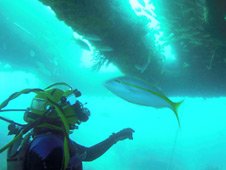 To stay in an underwater habitat longer than 12 hours means to stay under saturated conditions, which requires an aquanaut decompression sequence of at least several hours. This decompression procedure is very critical: if any aquanaut gets into an emergency situation, there is no way to take him out of the chamber before the sequence is finished. If the procedure is badly designed there is no way to bring a paramedic into the chamber. For the period of several hours the aquanaut would be alone with his companion. Contact us for access to the full article.
History of Underwater Habitats
 Check out Wikipedia for all information about the history of Underwater Habitats. We just finished the preparation for the same article on the German Wikipedia and will continue to add the results of our investigations there.
Image by Wikimedia Foundation
Geschichte der Unterwasserstationen
 Nachdem wir uns dazu entschieden haben, alle Studien über bisherige Unterwasserstationen in die deutschsprachige Wikipedia einzupflegen, ist nun der Artikel über Geschichte und Technik von Unterwasserstationen soweit abgeschlossen und dort online. In Zukunft werden noch weitere Infos hinzugefügt.
What happened to the artificial gills?
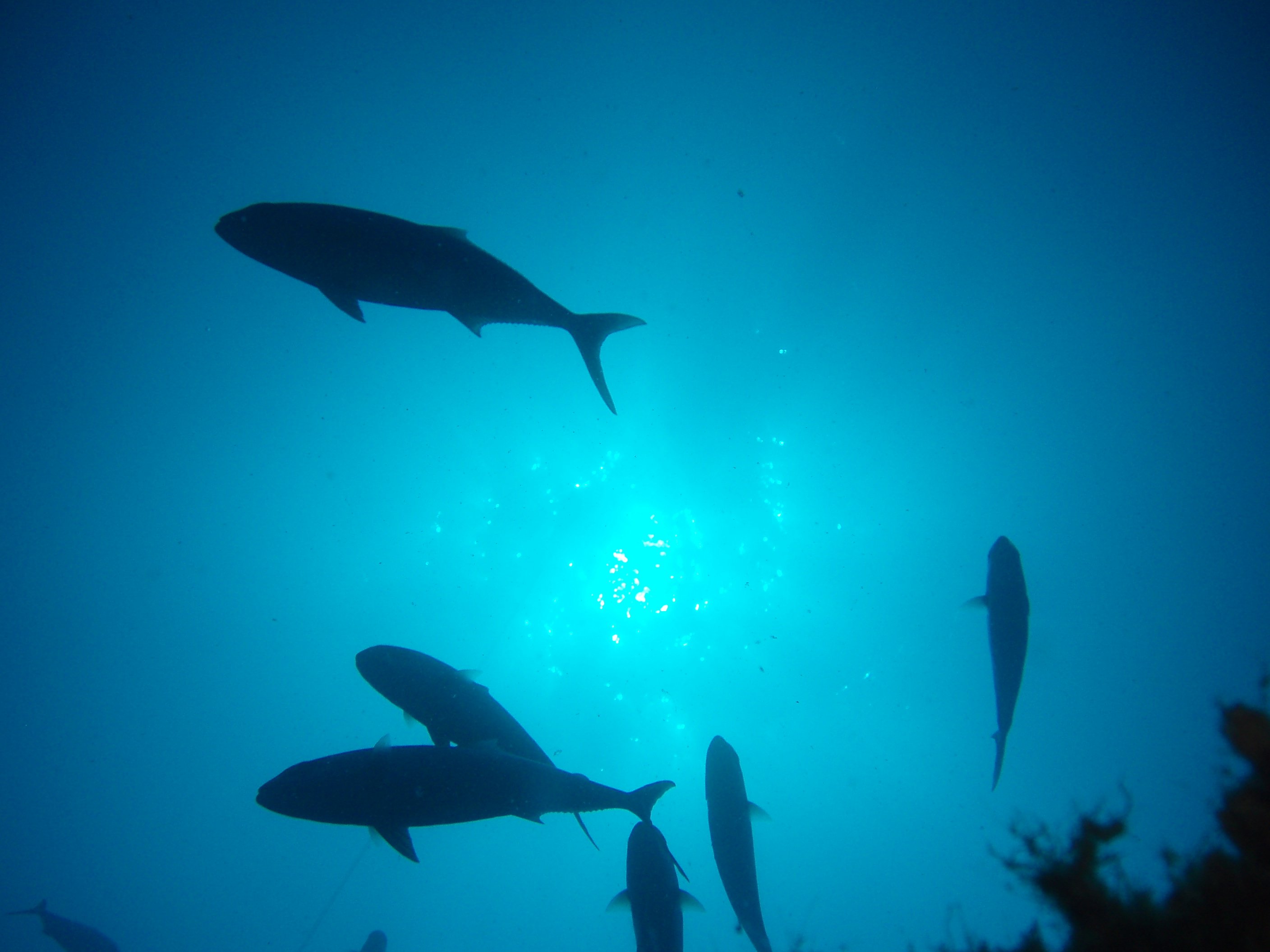 The Triton is a sort of artificial gill that would extract oxygen from the water for you in an on-demand fashion as you swim, obviating the need for bulky SCUBA gear. Is this really possible? Find the answer on Deep Sea News.
The UW Station Forum (2007-2012)
 The first idea for an undersea station developed in 2007 with the opening of the Underwater Station Forum on UnderwaterPromotion.com. In the following 5 years we collected nearly 250 evaluated contributions on 34 subjects. Without counting all hits of bots and search engines we had more than 200.000 interested readers. The page might have been fatally hacked, but all these contributions were not lost. We distilled them and are still publishing the summaries on CalamarPark.com since 2016. Still it is an open-source project and we ask everyone interested in the subject to contribute his ideas and comments via the comment function under each post.
Scuba Education Book For Children
 As an initiative of Dieter Heinz, former owner of IWM, we finished development of the Aquanautica in 2006. The educational book for children scuba courses in shallow waters has 27 pages and explains all details in a language that makes the complicated subjects easily understandable. All illustrations and layouts were made by Calamar-Park (or the former Underwater Promotion Office) while all contents were supervised and directed by Dieter Heinz who took a great part in developing children equipments for MARES/Italy.
The German version of the Aquanautica received wide appreciation by the CMAS (Confédération Mondiale des Activités Subaquatiques) and was officially recommended by the Federation of Diving Centers VIT (Verband Internationaler Tauchschulen). Continue reading “Scuba Education Book For Children”
Plants Clean Air and Water for Indoor Environments
![Osmunda Regalis, Christian Fischer [CC BY-SA 3.0 (http://creativecommons.org/licenses/by-sa/3.0)],](https://calamarpark.com/wp-content/uploads/2016/10/Königsfarn.jpg) Back in the late ‘80s, NASA was looking for ways to detoxify the air in its space stations. So it conducted a study to determine the most effective plants for filtering the air of toxic agents and converting carbon dioxide to oxygen.See more on GOOD Magazine. Or the corresponding pdf’s:
Back in the late ‘80s, NASA was looking for ways to detoxify the air in its space stations. So it conducted a study to determine the most effective plants for filtering the air of toxic agents and converting carbon dioxide to oxygen.See more on GOOD Magazine. Or the corresponding pdf’s:
- ntrs.nasa.gov: Plants Clean Air and Water for Indoor Environments
- ntrs.nasa.gov: Interior Landscape Plants for Indoor Air Pollution Abatement
Image: Osmunda Regalis, taken from Wikimedia, Christian Fischer [CC BY-SA 3.0 (http://creativecommons.org/licenses/by-sa/3.0)],
Tektite Habitat on Wikipedia
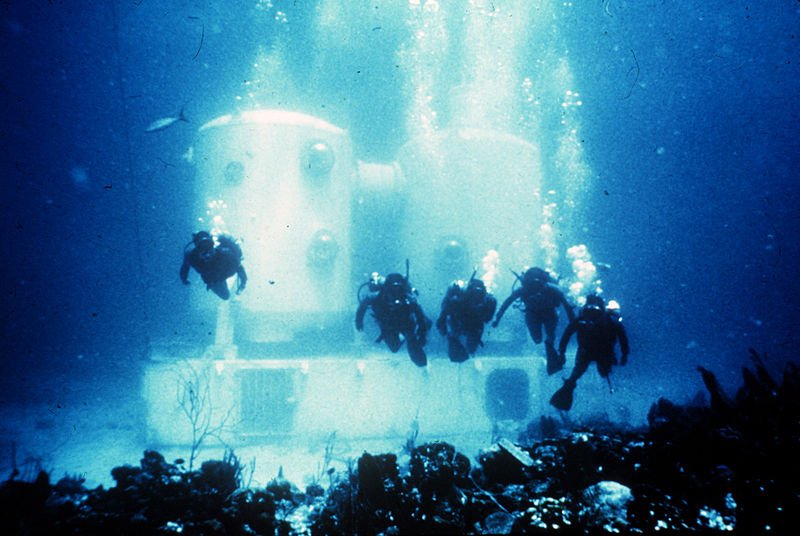 The Tektite habitat was an underwater laboratory which was the home to divers during Tektite I and II programs. The Tektite program was the first scientists-in-the-sea program sponsored nationally. The habitat capsule was placed in Great Lameshur Bay, Saint John, U.S. Virgin Islands in 1969 and again in 1970. Get all information on Wikipedia.
Habitat ‘Tektite’ auf Wikipedia
Ich hab’ alle auftreibbaren Informationen zum Habitat Tektite mit den MIssionen Tektite I (1969), Tektite II (1970) und Minitat auf Wikipedia zusammengetragen, wo sie hoffentlich bis in alle Ewigkeiten abrufbar bleiben. Hier geht’s zum Artikel.